
Democratising AI Resources in India
Regional AI Impact Summit 2025, Odisha
Event Highlights
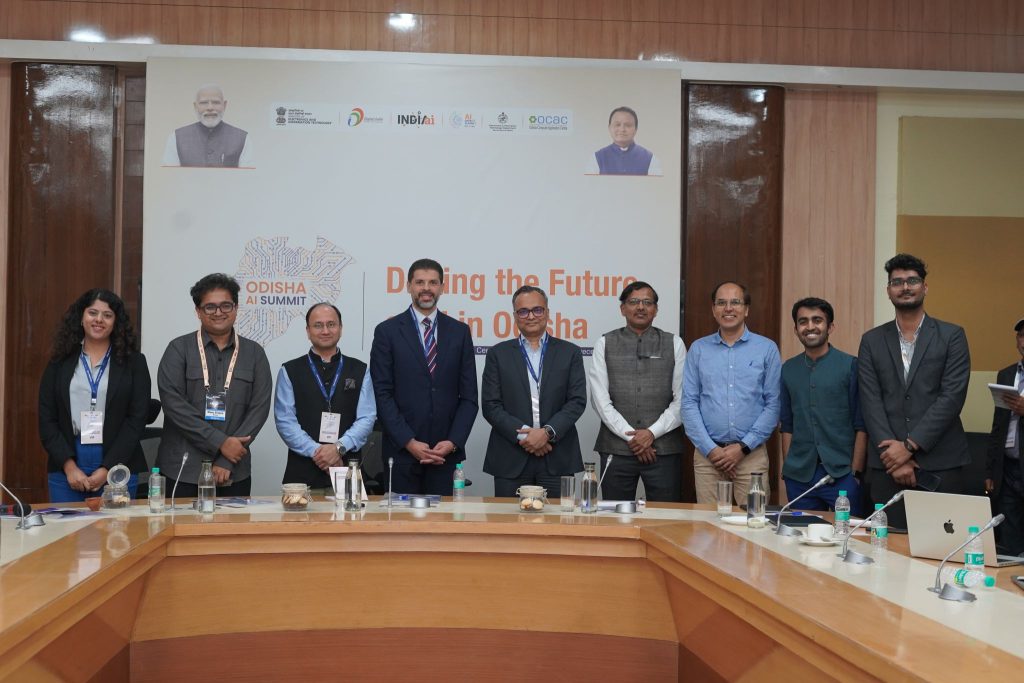
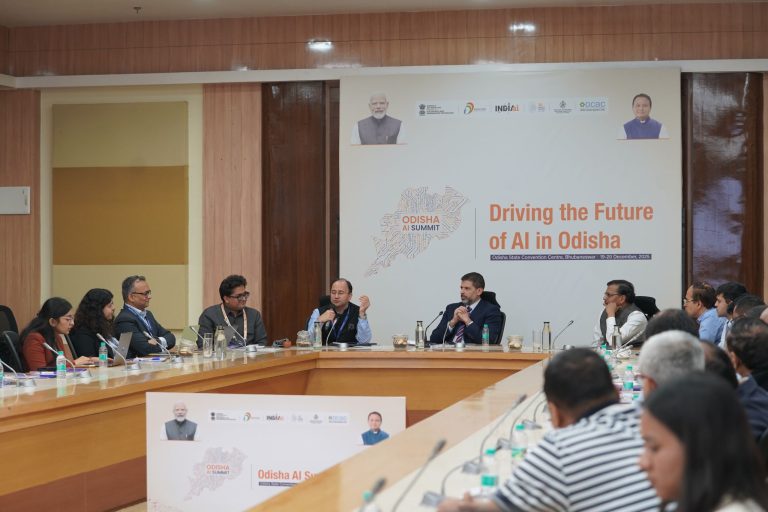
On 19 December 2025, Kalpa Impact, hosted a panel discussion on Democratising AI Resources in India as part of the Regional AI Impact Summit 2025, Odisha.
The conversation spanned the full AI stack, from foundational enablers such as connectivity, data, compute and talent, to the most important question of all: how AI can be directed to solve real human needs at scale.
The event saw over 60 participants across technology, policy, academic institutions and startups.
Key Insights from the Discussion
- Regional Collaboration: There is a clear need and strong appetite for countries to collaborate on AI resources and shared learning. The panel highlighted the significant gaps in accessibility and affordability, particularly when it comes to compute. These gaps can be meaningfully bridged through collective effort. The IndiaAI Mission was cited as a tangible step in this direction.
- AI Resource and Problem Solving: AI resources are necessary, but not sufficient, to shape the trajectory of AI for public purpose. Impact will ultimately be determined by how AI shows up in addressing priority challenges across healthcare, education, agriculture, livelihoods and public service delivery, and whether these solutions can scale sustainably.
- Multilingual AI: Access to context-specific and multilingual datasets is critical to building AI systems that work for communities in their own languages. The discussion noted that most AI language models today are trained predominantly on a limited set of high-resource languages, primarily English, which constrains inclusive adoption.
- Public Purpose: Beginning with the question “what problem are we solving”, and building with community participation and safeguards, was seen as essential to making AI useful, trusted, resilient and inclusive. Designing for public purpose from the outset was repeatedly emphasised as a prerequisite for long-term impact.
Perspectives from the Panel
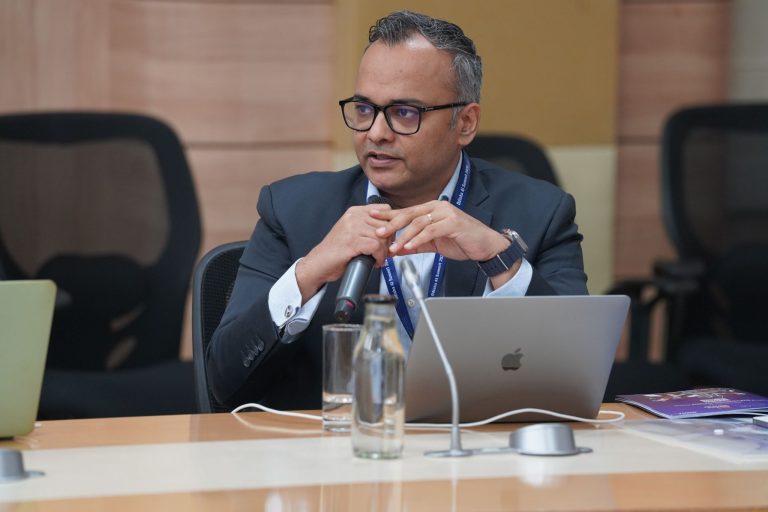
The discussion was enriched by a diverse set of voices from policy, practice and deployment:
- Ahmed Hefnawy – AI Governance Expert, Ministry of Communications and Information Technology, Egypt, shared how Egypt is collaborating closely with India through a working group to shape a future of AI that benefits all.
- Shri. Amit Shukla – Joint Secretary, Ministry of External Affairs, spoke about the importance of global collaboration in unlocking AI’s full potential for the common good.
- Sushant Kumar – Founder and Chief Executive Officer, Kalpa Impact, emphasised the importance of first understanding what AI resources are required for a specific use case in order to focus efforts and arrive at meaningful solutions.
- Manu Chopra – Chief Executive Officer, Karya, urged innovators to prioritise the creation of local datasets to enable truly inclusive AI that communities will adopt and trust.
- Santosh Kevlani – Voice AI Strategist Advisor, EkStep Foundation, highlighted how Voice AI represents a powerful pathway for AI-driven public engagement and service delivery in India.
- Vidyasagar SK – National Head of Deployments, EkStep Foundation, outlined the importance of minimalist thinking to ensure AI solutions can scale effectively beyond the pilot phase.
Acknowledgements
We would like to thank Dr. Saurabh Garg – Secretary, Ministry of Statistics and Programme Implementation, and India Co-Chair of the Democratising AI Resources working group, for his leadership and for the opportunity to advance equitable access to AI resources globally.
Our thanks also to the IndiaAI team for their collaboration and support, including Khushal Wadhawan, Arjun Gargeyas, Dipankar Rath, Suyash Gaur, Payel Bhattacharjee, Tanvi, and others who helped make this conversation possible.